Friday, April 3, 2015

The Mystery of Ghost Farm

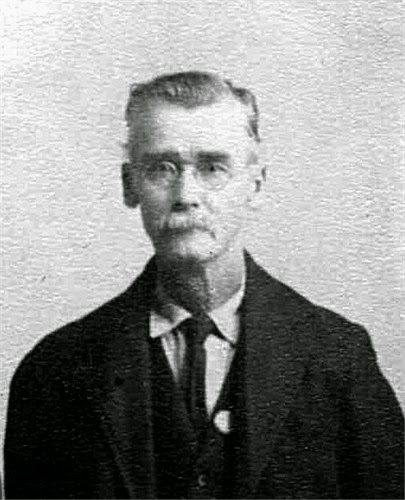
UNK Schmull/Schmoll > Henry Smull (my 3rd great grandfather's brother) > Henry "Harry" Smull > Jasper Guerney Smull

Switching over to a little of the SMULL side. This would be my paternal grandmother's, mother's
side of the family. Old Grandma Kate was quite a pip I hear. Her people came from Germany originally, but settled first in Eastern Pennsylvania and then set up shop for generations in Miles, Centre County, Pennsylvania.  Right in the center of the state, imagine that. It was a heavily-German area and the residents spoke German and lived as they might have in Germany. Strongly Lutheran, this particular branch of the family was Methodist, thanks, I'm sure to Jasper's mother, Olive Elizabeth "Lizzie" Rauchau.

Jasper Guerney Smull was born 04 Mar 1901 in Centre County. "Guerney" as he was then known, hired out to Mr. Wallace Walker as a farm hand some years before this incident. Mr. Walker had a wife named Malissa "Laura" Walker. Since before 1920, the two had also shared their home with  a summer boarder named Velma Burd Miller. Velma boarded with them except for the time of her brief marriage in the 1920s.

All was not happy in the Walker home, it would seem. Laura had quite enough of said Mr Walker and wanted to drive Mr. Walker off the property. So, she devised a plan that would send Wallace skittering away, thus ensuring the land would fall to her. The outcome of her mad plan hit the AP news wire and was published nationwide.


Hold Farmhand as "Ghost" Who Scared Farmer
Mystery Thought Based on Desire of Wife for Property

Bellefonte, Aug 27, 1927 - A farmhand today is in jail at Bellfonte charged with being
the "ghost" who for years has terrorized W J Walker, farmer, of near Madisonburg. Two alleged accomplices also are detained.

Gurney Smull, the farmhand, in alleged confession, said that he had been hired by Mrs Walker to drive Walker from his home so that the property would fall into her hands.

Corporal T. E. Willer, of the State HighwayPatrol, and Sheriff Robert Taylor caused arrest of the trio after he had spent a night at the Walker farm at the request of the terror-stricken farmer.

Bed linen was snatched from the two sleeping officers in the farmhouse, They saw a white-clad figure slip away. Signs written in a red fluid were found posted in the house the first day, telling  all occupants to flee.

Smull was suspected because his stature tallied with that of the ghost. Under a grilling, he is said to have given a signed confession. Mrs Walker was arrested as well as Miss Velma Miller, a summer boarder, who was also taken into custody. The three are under bond."

The three cohorts in crime must have not been the sharpest knives in the drawer to have tried to pull one over on the local constabulary. Why not wait until they left to start their ghostly shennanigans again?

Wallace Walker must have been an incredibly forgiving soul, because the wife, boarder and hired man continued to live there with him until at least the time of the 1930 census, nearly three years after he'd been frightened nearly to death by the ghostly apparition of Jasper Guerney Smull.

Mrs Walker ended up spending the rest of her days with Mr Walker,who lingered on until 1949. Jasper eventually moved on and became a hired man to another farmer. He remained single, and died in 1987.

Friday, March 20, 2015

Jesse James, Buffalo Bill Cody, and The Keeley Cure: Agnes Watson Smith Bowers

Jacob Smith > James Smith (brother of my 2nd great grandfather William Custer Smith) > William Lawrence Smith married Agnes Watson


Agnes Morrison Smith and
Agnes Watson Smith Bowers
James Smith, born in Guernsey, Ohio, in 1822, left his family in Grant County, Wisconsin and headed to Polk, Bremer, Iowa along with several other family members in the mid-1860s. He had served faithfully as a sergeant with Company K, Wisconsin 19th Infantry Regiment from early 1862 until mid-1865. Part of that time was spent as a POW. He and his wife Susanna Johnston Smith had seven children.

Their fifth child, William Lawrence Smith, was born in 1853 in Grant County, Wisconsin. He moved with the family to Iowa, then moved as a young man West to the Republican Valley, Spring Creek Township, Harlan County, Nebraska. The Republican Valley, named after the Republican River, was a rich prairie land and favorite buffalo hunting ground for the Sioux Indians. Settlers had feared to travel there until the the US Army ran a series of campaigns, ultimately annihilating the warriors and capturing their women, children, and horses in 1869. W.L. Smith arrived sometime in the mid-1870s, when the settlements were only a few years old.

Agnes Watson, the fifth child of Scottish Immigrant parents, was born 22 Dec 1856 in Astoria, Queens, NY.  Her parents were James Watson, born 07 Jan 1825, and Agnes Morrison, born 07 Aug 1826, both in Dundee, Angus, Scotland.  The two surviving children of the four they had in Scotland, accompanied them across the ocean. Young Agnes was the first to be born in America and was quickly followed by four others, one of whom died in infancy.

Jesse James
With the Civil War over, the family decided to move West. The eldest son, James, and a couple of other young men walked West in hopes of finding a place for their families to settle. And, of course, what would any family story be without the appearance of outlaw Jesse James?
"Most of their money they carried in their shoes, but they also had a little pocket money.  One day they were robbed by Jesse James of their pocket money.  When they reached Nebraska, they decided this was the place and soon the rest of the family joined them."
Agnes met and married William Lawrence Smith on 08 Jan 1878. They had two children, Agnes Morrison was born 07 Jan 1879, and William "Willie" Lawrence was born 22 Mar 1880. Willie did not get to meet his son, because in early February 1880, Willie died at age 27 of what the coroner determined was heart disease.

What's a girl to do - on the frontier, with two small children to raise, but get a job and figure it out? In 1880, her widowed father-in-law, James Smith, lived with the family in Spring Creek. But then,
Buffalo Bill Cody
Agnes was hired to work in the kitchen of  Buffalo Bill Cody and Frank North's cattle ranch dubbed Dismal River Ranch, outside of North Platte. The ranch was built in July 1877 on the headwaters of the Dismal River in the Nebraska Sandhills. Cody and North sold the ranch in 1882 and it's unknown whether she continued to work there.

In 1884, she met  and married Mr. Joseph Cyrus Bowers, born 16 Jun 1861 in Linneus, Linn County, Missouri. Joseph is sometimes listed as an M.D., but is listed in the 1900 census as a pharmacist. He worked for the Keeley Institute, which promised cures for alcoholism, tobacco use, and drug addiction. He traveled extensively pitching the cure - a concoction of widely varied chemicals that are thought to include strychnine, alcohol, apomorphine, will bark, ammonia, and andatropine. Bowers extolled the virtues of the "Keeley Cure" far and wide until his untimely death at age 44 in 1905 at Oxford, Nebraska. This "cure" eventually fell out of favor, but was used in variations through 1965.


Joseph and Agnes had two children who survived to adulthood, Van Buren (named for Joseph's father), born 02 May 1885 in Oxford, Nebraska and James Harvey, born 20 Sep 1888 in Bucklin Township, Missouri. Van Buren reportedly left home in 1902 to go work for his uncle Dave Watson and aunt Belle Watson Richardson, both of whom had married and moved to Crook County, Wyoming. He returned home for a visit in time for his father's funeral.

Agnes' daughter Agnes Morrison Smith had met and married Mr. Fred Callander sometime before the turn of the century and pioneered in Nebraska. Their story will follow.

Life after Joseph's death had its ups and downs. Her son, like his father and namesake, died at age 27.
"Agnes then kept house for her eldest son, Willie, as he had a homestead and times were hard. There were a lot of big birds in the area and many of them roosted on the windmill. Willie and Agnes devised ways of catching them and used the meatiest part for food to keep from starving. In 1907, Willie somehow injured his foot and it developed into blood poisoning and he died June 6, 1907.
Agnes decided she wanted her family reunited and so she and James Harvey loaded all their belonging into a covered wagon and Agnes' buggy and headed for Sundance, Wyoming.  The wagon was so loaded that in places they had to unhook the buggy team and hook them on the wagon to pull the load over the steep places, then go back for the buggy.  By the time they reached Sundance, where Van lived, the horses were nearly dead."
Bear Lodge Country is located in a small mountain range outside of Sundance. It's near Devil's
Devil's Tower
Tower, the first declared national monument. Sacred to the Indians of the area, the tower was so declared by naturalist and President Theodore Roosevelt in 1906. Sundance, founded in 1879, was settled after numerous battles with the Indians in the area. Early settlers set up mining claims and cattle ranches. Crook County was named in 1885.

"When the family was all together again, they each took out a homestead in the Bear Lodge Country about 13 miles from Sundance.  They built a log house for Agnes near a beautiful littlespring.  They cleaned out the spring and rocked it up so they could get the water deep enough to dip from and still leave it to run freely. They lived there long enough to prove up on their homesteads and for the two boys to marry.  Van married Hilda Reinhold on 01 Oct 1913 and James married her sister, Amalia, 11 Nov 1917."

Sundance, Wyoming abt 1910
Once the boys were both married, Agnes moved into town and took in patients to nurse in her home. When age and infirmity kept her from being able to work, she moved in with son James and wife Amalia. She died on 06 Jan 1934.  She'd lived a long life, fraught with hard work, near-starvation, the loss of two husbands and two children, yet she was a survivor.

Quotes taken from a document believed to be:
Pioneers of Crook, County, Crook County Historical Society, Crook County, Wyoming, Pierre, SD; circa 1981

Tuesday, March 17, 2015

Raid at Cabanatuan: Japanese POW Clinton Spencer Goodbla, World War II

I've decided to try and provide a list of descendency for these stories to help my fellow genealogists:

Jacob Smith > James Smith (brother of William Custer Smith - my 2nd great grandfather) > John R Smith  > Alfred Smith > Susie Smith Behrends > Dorothy Behrends married Clinton Spencer Goodbla
Add caption

Clinton Spencer Goodbla was born to Carl F Goodbla, originally from Sweden and Amelia S. Backlund in Montana. Spencer, as he was known when he was young, lost his mother in 1915. He lived with his aunt and uncle Anna and Henry Goodbla in 1920 in Musselshell, Montana and by 1930, was living with his father in Mitchell, South Dakota. By 1940, he was living in Cowlitz County, Washington. His father lived in West Bend, Iowa.

Clinton served in the US Army during World War II and was assigned to Battery A of the 60th Coast Artillery Regiment that was assigned to protect Manila and Subic Bay with anti-aircraft support. The battle for the Philippines was fought from 1941-1942 under the leadership of General Douglas MacArthur. By March 1942, the Japanese having overrun the area, MacArthur was ordered by the president to leave the islands so he wouldn't be captured or killed. He ran his battle from Australia. The Japanese took many prisoners before the ultimate surrender of the islands by MacArthur with his famous words, "I came through and I shall return."  

POWs Celebrate Liberation
The Bataan Death March wherein 78,000 (12,000 US and 66,000 Filipino) POWs were moved north 63 miles to confinement areas began on April 10, 1942. Clinton was one of those force marched. An estimated 7,000-10,000 died on this trek which lasted 5-12 days. The Japanese were not prepared to deal with this many people and also believed that those who surrendered had no honor and did not deserve humane treatment. Once the group arrived at San Fernando, they were herded into box cars for Camp O'Connell. From there, many were transported to one of three camps at Cabanatuan. Clinton was placed in one of these camps.

Conditions in the camp were brutal.  According to Clinton, "The healthiest prisoners were segregated and shipped to Japan, (ed note: where they were slave labor) many after the Nipponese realized the Yanks would reconquer Luzon." Many of these POWs were forced to work in factories, airfields, and shipyards to help the Japanese war effort in Japan, Manchuria, and Formosa.

The camp hospital doctors were forced to list causes of death for those who continued to die as being from disease instead of abuse or malnutrition.  Those who tried to escape were shot.
"To prevent any more escape attempts, the Japanese captors initiated what were called 'Shooting Squads' or 'Blood Brothers.' Each POW was assigned to a group of ten. If anyone in that group escaped, the other nine would be shot," according to fellow POW Billy Alvin Ayers.
According to this report from medical officer Col Webb E. Cooper:
"Each day an attempt was made to clear each barracks of the dying. They were removed to “zero” ward (ed note: those landing in this ward had '0' percent chance of leaving alive), laid on the bare floor entirely naked. These patients usually were profoundly emaciated, in fact, little better than skeletons with a feeble spark of life. Heroic corpsmen and doctors did what they could to alleviate the indescribable conditions.  They tied grass onto sticks and attempted to cleanse the floors.  They used the same method of cleansing the body.  Occasionally a big puddle of rainwater would provide enough water to wash the floor. At this time the use of the regular water supply system was strictly forbidden by the Japanese.  The few laymen who saw these conditions were utterly horrified.  Even the Japanese doctors would not enter these wards and the Japanese staff at Headquarters gave it a wide berth."

After three long years of horrifying imprisonment, with MacArthur and troops back in country, the Sixth Army's intelligence chief Colonel Horton White and Lt. Col. Henry Mucci, leader of the 6th Ranger Battalion, and three lieutenants from the Alamo Scouts—the special reconnaissance unit attached to his Sixth Army—met for a briefing on the mission to raid Cabanatuan and rescue the POWs.The group developed a plan to rescue the prisoners. After only a brief couple of weeks, the plan was approved and they took action on January 30, 1945, successfully freeing the prisoners in Cabanatuan and Camp O'Donnell. The exciting adventure is a must-read here.

Noted Associated Press war reporter from the Pacific, Fred Hampson, wrote this about his meeting with Clinton S. Goodbla after his liberation:  

Clinton was released from the military as a Technical Sergeant. He returned home and married Dorothy Behrends. They resided in Longview, Washington, where Mr. Goodbla worked as a millwork shop foreman.

Tragically, on December 19, 1953, Mr and Mrs Goodbla were driving along the Columbia River, 11 miles west of Longview, when their car plunged into the river. Dorothy was killed and Clinton was critically injured.  He did eventually recover and in 1954, married Lenore Malone. Clinton died on Feb 27, 1988 and was buried in Willamette National Cemetery in Multnomah County, Oregon.


Saturday, March 7, 2015

B. F. Lichty & Sons, Waterloo

Jacob Smith > William Custer Smith > Mary Madora Smith married BF Lichty

60th Anniversary, 1938
Mary Madora "Dora" Smith was the second child of my great-great grandparents, William Custer Smith and Mary Ann Munson. She was born on 23 Jul 1859 in Hazel Green, Grant County, Wisconsin. Shortly after  reaching her majority, she married Benjamin Franklin "B.F." Lichty who hailed from Somerset County, Pennsylvania, in 1878 in Janesville, Bremer County, Iowa. They resided in Elma, Howard County during the early years of their marriage.

Dora and B.F.'s first son, Norman Arthur "N.A.", was born 1879, within months of their marriage.
Original East High School, 1910
Their next child, Claude Smith Lichty, was born in 1887. Their final child, Verne Elias, was born in 1893. In 1902, they set up house in Waterloo and eventually lived on lower Franklin St in East Waterloo. Sometime shortly after that, BF opened his business, "B. F. Lichty & Sons" which specialized in sheet metal fabrication at 720-722 Water St. All of the boys attended East High School.

The business thrived through the 1910s to such a degree, they had to expand. They built a new facility at 1127 Sycamore in East Waterloo and the business remained there until it closed. At that time, Waterloo had 116 manufacturing plants in the city. Lichty & Sons had 16 employees. That building is still standing and is currently owned by the City of Waterloo. In the 1920s, in what was a nice middle-class neighborhood, the Lichty's built an adorable brick bungalow where they resided for the remainder of their life at 1202 Mulberry St. The area now is run down and while the house still stands, it is in need of restoration. That was a 2-block walk for the Lichty's from plant to home every day. The business maintained a respectable reputation and was able to continue operating through the depression and World War II.
Lichty & Sons, built 1913, 1127 Sycamore St

Young Verne was a star athlete at East High School  He attended the Waterloo Business college beginning in 1911 to prepare himself to work with his father and brothers in the business. At Christmas time of 1913 while playing basketball at the Waterloo YMCA, he injured his leg. In early 1915, he went to the Mayo Clinic and learned his leg injury had turned into a sarcoma after a surgery. In  May of that year, his left leg was amputated below the knee at Presbyterian hospital in hopes of putting the cancer in check. He then walked with crutches. Verne married in 1918 and had a daughter, Dorothy Anne, with his wife Anna Geyer Lichty and was expecting another child when he fell ill with a recurrence of cancer. He died at home at age 27. The son he never met, Verne Edward, born in May of 1921, served in the US Navy on the USS Auk, a minesweeper that saw heavy action, and left the service as a Boatswains's Mate 2nd Class. He worked as a tool and die maker at John Deere before having a massive heart attack while bowling at Maple Lanes (which still stands) in 1959 and died. Daughter Dorothy Ann lived with her mother in Northern California until her mother died in 1979. She married for the first time at age 51 to Welles Halley Crawford in Santa Clara, California.

In an article published in 1922, the company was located at 922 Sycamore, just a couple blocks down from the previous location. There had been a slump in business, business picked up again and there was a scarcity of both materials and labor due to the building boom. They were by then employing 20 people.  Sometime in the 1920s, N. A. Lichty and his wife moved to California. N.A. spent six years there and it appears that Mrs. Margaret (Kildee) Lichty remained behind and they divorced prior to
N. A. returning to Iowa, where he was president of the company until his death at age 56 in 1935.

He had one child, Evan, who died in Butte County, California in 1985. Evan enlisted in the US Army in 1943 and retired from the service in 1963.  The information I could find so far indicates he was a Seabee Chief Metalsmith in the US Navy. Evan's first wife was Ethyl Ruth Merrill, whom he married in 1926. He married Ina "Geraldine" Stewart next. They had three sons, two of whom survive. His family was stationed in Tokyo in the mid-1950s but his family spent the bulk of its time living in the Bay Area of California and eventually in Butte County.

Claude's son, Wilfred Franklin Lichty, suffered from diabetes and died of complications at age 20 in 1931. Claude and his wife Lulu divorced and he remarried. He continued to work in the family business until after his father's death and retired from the business in 1950. He died in 1953.

Dora died in 1941 at age 81 and B.F. died in 1945 at 87, both of complications of age.

An Aside

B.F. had a brush with the law in 1930 when he was interviewed about the violent death of a
Murder victim F.R. Smart, center
reclusive, divorced, elderly implement and real estate dealer of his acquaintance named Francis Robert Smart. Lichty was one of the last people to have contact with Smart.  Mr Smart had dined with the Lichty's on the night he died along with his stepson and his wife. About 10 o'clock that night,  just 45 minutes from the time estimated as time of death, Mr. Lichty called Mr. Smart to inquire about a wallet that had been misplaced by one of the other guests. The murder received no coverage in the Waterloo paper and appears to remain unsolved, with robbery as a motive. Mr. Smart was known to keep large quantities of cash in his office/residence. 

An inquest was set for today into the slaying of F. R. Smart, 77, implement and real estate dealer, whose bullet-riddled body was found in his office-bedroom late Saturday night.
Clutching in his hand a chunk of iron casting, and slumped against the wall opposite the door that apparently had admitted his assailant, the body of the recluse was discovered by a neighbor, Johannes Hanson, at 10:45 o'clock Saturday night. 
A deck of cards, half-played, indicated to police that the old man had been interrupted as he was playing solitaire. Aside from evidence of a scuffle, officers could find no clews (sic) or fingerprints.
Robbery was evidently the motive, investigators believe, for Smart was know to have as much as $500 at a time in his living quarters, which also served him as office. The amount that he might have had with him Saturday night was undetermined, nor was it ascertained whether anything was missing. That Smart had tried to protect himself, led the officers to believe that his attacker was not prepared to find the victim at home.
Bullet holes slanted upward into the body, indicating the assailant had been floored and had shot supine. Three empty shells from a .32 automatic were found on the floor."
Mason City Globe Gazette, 14 Apr 1930, pgs 1 and 2 
The County Coroner declared it a murder by persons unknown on the following day. No further information was published about the crime, indicating it was never cleared from the books.

Wednesday, February 25, 2015

Little House on the Prairie: Saskatchewan Edition

Jacob Smith > James Smith (my 2nd great grandather's brother) > Alexander Smith

Some of those who migrated West during the 1800s did it to find cheaper land or to take advantage of new opportunities in the myriad of boom towns that sprung up from Illinois to Dakotas and into Canada. Some did it for the adventure, rarely staying put in one place too long and waiting until they found the place to grow old.

Alexander Smith defined himself as an adventurer and spent much of his early life finding the next great thing. He was born 16 Jun 1845 in Steubenville, Ohio to James Smith and Susan Johnson, He was the last child born in Ohio before the family migrated to the Eastern Territory of Wisconsin in late 1845 or early 1846. He married Jessie Monteith, the daughter of Scottish pioneers Edward Monteith and Agnes McCubbin on Christmas Day, 1866, in Grant County, Wisconsin.


Grant County was a mining area. Cornish miners worked the mines and towns sprung up around them. Land was available and fertile, so it also became a flourishing farming region. Many of my relatives used Grant County as a launching point for further migration over the course of the next few decades in search of inexpensive farm land.

Alexander and Jessie moved to Spring Creek, Harlan, Nebraska and homesteaded. Harlan County was established in 1870 and settlers began coming to the area which had plenty of fresh water and a valley of arable and tillable land soon thereafter.  The length of their stay there can't be clearly deduced since no 1870 census is available for them, but in 1880 they were farming there and by 1890, they were in the Duluth, Minnesota area. Their daughters, Minnie (1890) and Mabel (1895) were born in the Duluth area. The Smith's,ready to move on, contemplated moving on to their next chapter up north.

Kindersley, Saskatchewan was settled in 1910, and named after Sir Robert Kindersley, who was a major shareholder in the Canadian Northern Railway. Settlement in Kindersley began when the first homesteader arrived from Saskatoon by Ox Cart, in 1905.

In 1911, Alexander and Jessie and the Anderson's emigrated to Kindersley, not far from Medicine Hat, probably lured by the railroad completion through the untouched prairie land up for settlement and the advertising created to lure new settlers. Canada had defined a new settlement policy that mirrored a young America's policy, granting 160 acres of free land to any man over 18 (or head of family woman). Advertising downplayed the need for agriculture experience and portrayed the area as an idyllic land of plenty.
Minnie and Melvin Anderson at their soddie outside of Kindersley, about 1914
The platting of the land put the homesteads quite far apart, leading to isolation. For those early settlers, who often lived in sod houses, the reality was forbidding and far from the recruiting ad promises of a veritable Utopia. Minnie married Melvin Gustav Anderson in 1913 in Saskatchewan. They homesteaded in an old soddie early in their marriage.

It's not clear just how long the Anderson's stuck it out in this difficult life, but by 1920, they, along with Minnie's parents, were living in Brook Park in Pine County, Minnesota. Minnie's Uncle James "Doc" Smith, who had also moved north, settled in Moose Jaw, where he remained for the rest of his life.
James "Doc" Smith
Remained in Canada
Perhaps life in Canada broke the Smith's of their need for adventure, because they resided in Brook Park until they died. Alexander died in 1925 and Jessie in 1939, their gravestones marked with, "Pioneers - Adventurers - Philanthropists."

Melvin spent his remaining years farming and then working as an administrator in soil conservation and Minnie raised their five children. Melvin died in 1960 and Minnie followed him in 1966. Minnie's sister Mabel moved back to Saskatchewan, by then far less forbidding, after marrying her second husband and remained there until her death in 1979.

Tuesday, February 17, 2015

Loss of War: World War II

In going through records, it always makes me pause when I run across a young man who died during years of war. World War II seems to have taken the most young male relatives. It's difficult to run across a man from that era who did not serve, though most of them returned home. I'd like to tell the stories of some of those who didn't return, to keep their names alive in our memories for their valor in a dark time in our history.

Lt (JG) Melvin Laverne Butler, US Navy Reserve, was the son of Thomas Jefferson Butler and Grace Brown (who is related on the Monteith side of the family). Melvin was born in Chadron, Nebraska in 1917.

Melvin entered the Naval Reserve when the war broke out and was trained as a pilot. He was sent to the Pacific Theatre. He flew the PBY Catalina, a patrol bomber with long-range capabilities that served the Navy well in a number of capacities the makers of the craft never imagined, including sea rescue of downed pilots. Melvin survived a shoot down earlier in 1942 when he was able to land his aircraft, hide out until dark, and be rescued. On October 14, 1942, his luck would run out. While flying a mission to locate a Japanese fleet, he and another pilot spotted the fleet east of the Solomon islands and north of the Santa Cruz islands. Both pilots were shot down. Butler was able to transmit a brief tactical message prior to crashing. He was declared missing at that time and declared dead in December 1945. In 1946, he was posthumously awarded the Purple Heart.
(based on information provided by his great niece, S. Teddei in a copyrighted 2011 article on Ancestry.com)


Harry Frederick Bradshaw, Seaman 1st Class, US Navy
Harry was the son of Raymond and Macie Bradshaw of Belle Plaine,
Benton County, Iowa. He was born 15 Oct 1921 in Charles City, Iowa and died in the Coral Sea on 08 May 1942. He was buried in the cemetery at Fort William McKinley, in Manila, Phillipines. To learn about the battle which took Harry's life, visit this earlier post.


PFC Robert "Bob"L Opperman, US Army, was the son of Harold Opperman and Wilma Barr, who at the time, resided in Bremer County, Iowa. He was born on 25 Jun 1923. Bob was a nose gunner stationed in the 422nd Base Unit at Tonopah Army Airfield in Nye County Nevada. The base had recently started running training flights for the larger bomber aircraft. On 19 May 1944, the B-24D Liberator on which he was flying crashed shortly after takeoff due to engine failure. Seven other aviators lost their lives on this flight. Though there were several accidents at the base, there is very little information regarding this flight and its crew.

Private Robert Harold Arthur, US Army, was born in Maynard, Fayette County, Iowa on December 15, 1917 as the oldest child of Herald Arthur and Laura "Ranney" Arthur. He married the former Evelyn Simpson. He entered the service as a draftee on November 18, 1943 at Camp Dodge, Herrold, Iowa. Robert received his basic training at Camp Blanding, Florida before he was sent overseas in June, 1944, as a Private in the 83rd Infantry Division, 330th Infantry Regiment, 1st Battalion, C Company.

From Into the Hornet's Nest: 

By the beginning of August, the 83rd was part of Patton's 3rd Army, and while most of the 3rd Army turned east out of the Cotentin Peninsula toward Paris, the 83rd Division turned west into Brittany through Coutances and Avranches. The coastal towns of St. Malo and Dinard belonged to them alone.
Strategically, the battle for St. Malo may not have been one of the "big battles," but that does not detract from the monumental campaign that it was. It is an incredible tale about an American commander with the improbable name of Major Speedie (329th Infantry) and a "mad" German Colonel (von Aulock)--complete with monacle, flapping coat, German Police dog, and a mysterious mistress having a "past" with Russian royalty. He said he would hold out to the last man in an ancient fortress that had been heavily reinforced with concrete and contained underground tunnels, storage areas, power plants, ammo dumps, living quarters, and even a hospital. Read More...

Robert died the day before the first US troops arrived in Brest, their ultimate destination. He left a wife and four children. He received the Purple Heart and Bronze Star for bravery under fire.


PFC Leo I Gulick, US Army, was the son of Herman Gulick and Edna Thomsen born on 25 Apr 1912 in Clarksville, Iowa. He married Eunice Clark and had two daughters before he left to serve his country. Gulick was assigned to the 18th Infantry Regiment, 1st Infantry Division died during battle after the Battle of Aachen. At the time, Nazi defenders were fiercely attempting to keep their hold on whatever they could as the Allies closed in on them from all fronts. No details are available on the battle in which he died, but he received a Purple Heart for his service. He was buried in Henri-Chappelle American Cemetery in Belgium. His parents, wife, and two daughters survived him.


2Lt John William Padget, US Army Air Corps, was the son of Charles
"Ernest" Padget and Hazel Barr. He was born in 1921 in Bremer County, Iowa. He enlisted 01 Dec 1942 and received his basic training at Kelly Field, Texas. He left for overseas in  October 1942.

John was a 2Lt in the 331 Bomb Squadron, 94th Bomb Gp (H) stationed in Bury St Edmunds, England.  John was flying as a bombardier in a B-17 "Bouncin' Annie" tail number 42102577, over Germany on 02 Nov 1944 when his aircraft was presumably struck and went into a tailspin and crashed at Merseburg, Germany. Merseburg was a major target for the Allies due to the oil refinery and other manufacturing in the city. He, along with the crew, were lost and listed as MIA on 02 Nov 1944, then KIA. He is buried in St Avold Cemetery, Lorraine, France, 3503, Block A, Row 19, Grave 37. He received the Purple Heart and the Air Medal.

Tech5 Charles E Sperbeck, US Army, was the son of Ernest Sperbeck, Jr. and Ola Clark of Hillsdale, Michigan. He was born 07 Apr 1923 in Frontier, Michigan. Sperbeck attended Western Michigan for one year in 1942 before being drafted into the Army. He was assigned to the 26th Infantry Division, 101st Infantry Regiment and was killed on 14 Mar 1945 during the "Push to the Rhine" near the end of the war:

The first week in March saw the Regiment outposting the Serrig area
and that area east of Saarburg. It was evident that something of importance was in the wind. On the 12th of March an order was given calling for an attack on the 13th of March in conjunction with the XX Corps attack. Our mission was to clear the area south of the Moselle. Initially, the 101st Infantry was in reserve. At 0300 on the 13th of March the attack began, preceded by a tremendous softening up barrage by the 101st Field Artillery. While the 3rd Battalion was attached to the 328th Infantry, the remainder of the Regiment bivouaced east of Serrig. The 3rd Battalion spearheaded the attack of the 328th Infantry Regiment at Serrig; an attack that broke organized German resistance at that part of the Siegfried Line. On the 15th of March the entire 101st jumped off in a column of battalions. Progress in rugged terrain dotted with pillboxes, was slow but steady. On the 17th of March, "C" Company took the town of Bratdorf.

Monday, February 16, 2015

Walter Kermit Spurgeon Gets Robbed

Jacob Smith > William Custer Smith > Harland Smith > Leone Smith married Walter Spurgeon

Leone Smith was the youngest child of Harland Smith and Fannie McGoon. Harland was the third child of William Custer Smith and Mary Ann Munson. Leone was born in 1895 in Plainfield, Bremer County, Iowa.

She married Walter Kermit Spurgeon, son of Sidney Adam Spurgeon and Sarah Carlton. After their
marriage, the Spurgeon's moved around a bit, landing sometime in the 1920s in Del Rio, Bernalillo, New Mexico where he was in real estate sales. They later they moved to Long Beach, California. During the war years, Long Beach was booming and shipyards were churning out ship repairs and transporting cargo like crazy to aid the war effort.
Walter Kermit Spurgeon and Leone Smith Spurgeon
Walter got a job as a checker in a local grocery store and they settled in not too far from Leone's sister, Edna Smith Corey and her husband Percy.
While not the Long Beach location,
this is an example of what the Mayfair
stores looked like in  the era

On September 11, 1952, two masked robbers entered the market through the rear door and after having the snack bar clerk clean out her register, they ordered, at gunpoint, 50-year-old Walter, who was having his coffee at the snack bar, to open the rest of the registers and cleaned out all the store's money. It was the second time in less than a month the store had been robbed. The robbers in the earlier robbery had pistol-whipped two employees. This time, no one was injured. The robbers got away with $5,000 in cash and checks. It had to be terrifying for the clerks, including Walter.


It took a bit of time and not before there was a total of 17 market robberies totaling $40,000 in losses, but the police finally got their men.  Three suspects accepted a plea deal to lesser charges. The fourth, William Ellhamer, chose to go to trial. Despite being fingered by the three other gang members, Ellhamer refused to answer questions when being arrested and at trial, presented an alibi witness. He was convicted of three of the nine counts of armed robbery and received a sentence of 10 years to life and initially served his time at Chino Men's prison. His wife divorced him. As of 1962, he was still imprisoned, now at San Quentin, a recent appeal having been denied. Ellhamer, a WWII US Navy veteran, died in 2010 in Orange County alone, with no survivors.


Walter Spurgeon died at 64 in Long Beach in 1961. Leone lived many more years, dying in 1976 in Spring Valley, San Diego County, near where her only child, Richard Kermit Spurgeon resided. Leone's sister Edna died in 1959.